







Home
Helping you find your path, card by card, step by step
“Life is but a stop along the path to drink a glass of tea”
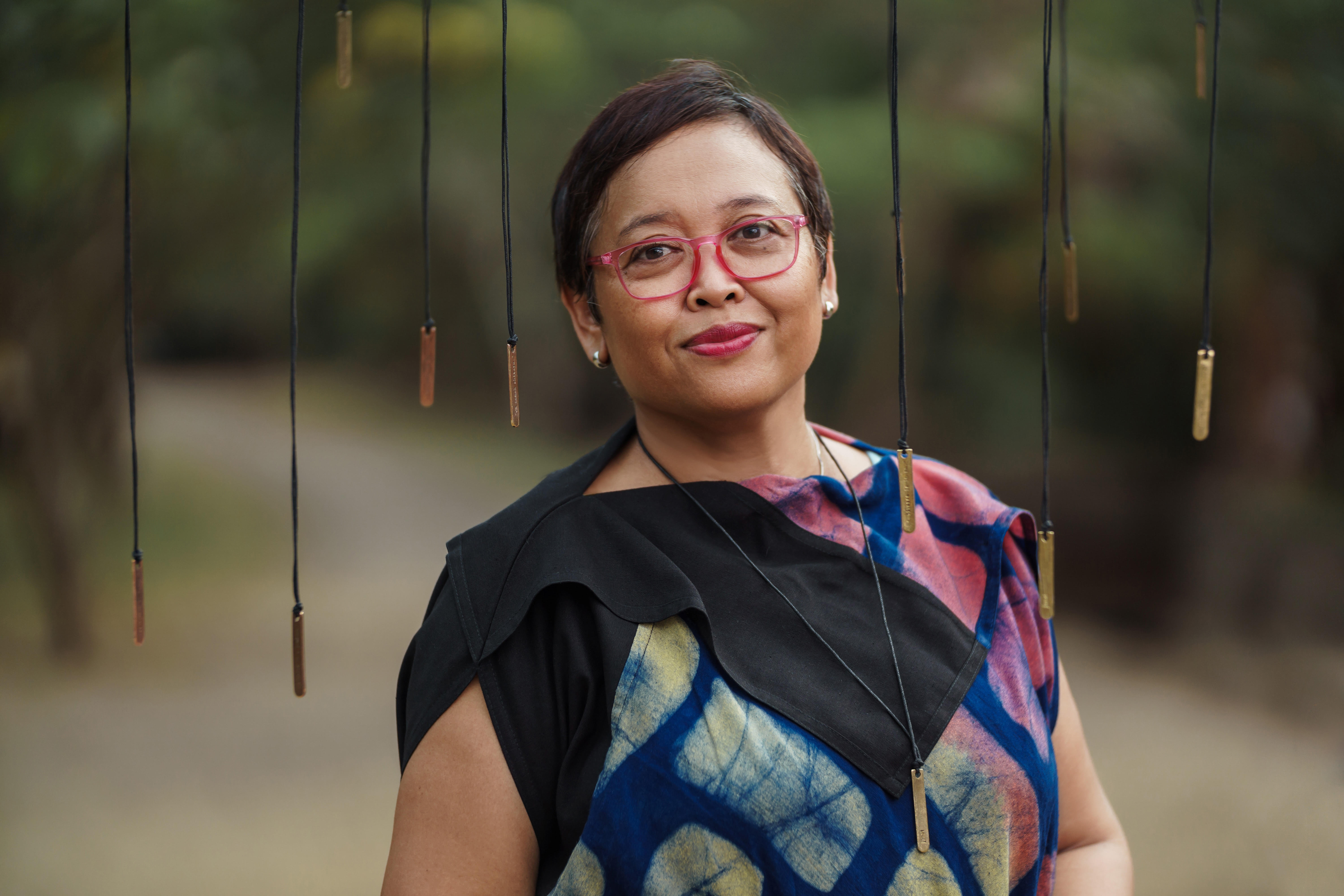
When you stop by along your path for a tarot reading with Novi, expect to be surprised by her accuracy. You pick the cards, but her interpretation is spot on and emotionally accurate. She is a natural healer and has a gift for communicating issues from deep inside your unconscious mind to you very simply, just as they are revealed to her in the cards. It’s great fun, even if you don’t have any problems or concerns. Novi is dedicated to using the tarot to help people find their way through life. If you do have questions, you will leave with clarity, and a sense of relief.
The Javanese define life as “nothing more than a pause on the path to drink a cup of tea”. Novi’s approach to tarrot is influenced by her Javanese background in Sumarah philosophy. “We start from the idea of our humanity, from the acceptance that we will never be perfect and that we will always make mistakes,” she says. This is what gives Novi’s readings such an encouraging and uplifiting character.
According to her Javanese belief, since life is continuous movement and reality changes all the time, we have to learn to know and respect what is there for us and at the same time not to get too attached to it. Her belief does not offer solutions, it does not promise salvation, neither does it guarantee success. Her belief is mainly a way, an instrument of life, for life and in life, not an end in itself. Just like the meditation it is a tool that helps us arrive somewhere, but once we arrive, we eventually have to let go of the tool.
“That’s the way I read Tarot” says Novi.
You can bring a list of questions you want answered, and Novi will keep going until there are no cards left in the pack. ( written by Jen Richardson, PR Consultant, Ubud)
How Tarot Cards Work ?
In most people’s minds, “Tarot card reading” means a woman in flowing robes, leaning over a small table in a candlelit room, foretelling impending doom.
But that’s not really what Tarot cards are about. In fact, they’re not even really meant to tell your fortune or future. According to The Hermetic Order of the Golden Dawn, “The most powerful sources of information come from within; the Tarot aids in coming in contact with one’s Higher Self.”
But what does that mean? We’ll look at the various ideas about where Tarot cards come from, what they mean and how a deck of cards can possibly tell you anything about yourself. You’ll learn why it matters where the cards fall and why you don’t have to be a psychic to do a Tarot reading.
Types of Readings
There are actually two different types of Tarot readings: question readings and open readings.
Question Readings
In question readings, you are addressing a specific question. Tarot is not intended to answer specific yes or no questions. Most say it also shouldn’t be used to make decisions, but instead should be used as a guide to help you make the decision yourself. For this reason, the way a question is stated is very important. For the best outcome your questions should:
- Keep your options open: If you have the answer before the reading, then you’re not allowing the cards to guide your overall decision. Bunning gives this example: Asking how you could encourage your mother-in-law to move out, as opposed to asking how you can get along better with her, is narrowing the scope of the true question by answering it before you even get started.
- Find the best level of detail: Your question should be focused, but not overly detailed. Rather than looking at one particular aspect of a problem, find a way to look more broadly at it. For example, rather than asking how you can make your home life less chaotic, ask how you can better balance kid schedules and adult schedules. That is a focused question. But do not go so far as to ask how you can coordinate baseball, soccer and Cub Scout schedules and still have family time — that’s too detailed. Only include the minimum level of detail needed in order to express what you want to learn from the cards.
- Focus on yourself: If the reading is for yourself, make sure your question focuses on you rather than on someone else who you think may be the root of your problem. For example, asking why your son is experimenting with drugs is focusing on him, not you. Asking what role you play in your son’s decision to experiment with drugs brings the focus of the question back to you.
- Stay neutral: In order to stay open to other points of view, your question has to be neutral and not convey a preconceived notion that your view is necessarily the right one. The cards can give you guidance if you ask for it. For example, asking why you’re doing more work around the house than your spouse isn’t neutral; asking how you can get more cooperation from your spouse when it comes to housework is neutral.
- Be positive: Make sure your question is stated in a positive rather than negative way. Instead of asking why a specific event hasn’t happened, ask what you can do to help make that event happen.
Open Readings
Open readings address the larger aspects of your life rather than a specific problem area or question. They’re usually done when you’re entering a new phase of life, such as getting married, graduating from college or starting a family. You can somewhat direct the reading if you have a general area you want to cover, such as your career or health, but that’s as specific as the direction gets.
Do Tarot Readings Work And If So Are The Time Frames For The Predictions In The Future True?
- The Tarot Reading that you receive will depend upon the reader, and whether it is deemed to work will be your individual judgement, and will depend upon a number of factors, starting with your expectations. Tarot is an art not a science, and readers are often very talented intuitives, with a body of knowledge gained through long study of the Tarot which is a discipline in its own right. The reader uses their knowledge of the cards and the leaps of insight or ‘psychic’ perception looking at them may trigger, but readers, while often deeply sincere, are only human, therefore sometimes fallible. Use them as a source of extra help. The Tarot is a tool, the Reader uses it to ‘see’ you and to sense the help you may need. It can be a very powerful tool indeed, for accessing unconscious thoughts and feelings that may be holding you back in some way. Identifying these can be liberating. But the Tarot is just that…a tool, although rich in symbolism and in its power for associative thinking. Go by recommendation when choosing a reader, if possible. Ask before booking what type of service they like to offer. Is it classic fortune telling, which will involve an element of forecasting (prediction) Or do they use their Tarot cards as a route to obtaining impartial help and guidance for you with your questions or concerns? Or perhaps they do both. Whether Tarot readings ‘work’ depends on whether you have chosen a fluent, skilful and experienced reader, have clearly formulated your expectations are, and whether you are prepared to think actively about what is being said to you… to engage instead of being a passive spectator or consumer of entertainment. For a Reading to ‘work’ you could engage in active listening, give your reader feedback when they are on the right path, and ask questions. It is YOUR reading.
- The cards give a ‘best’ answer at the time they are being read; they tell you the most immediate path for the future based upon your current actions. If you walk out of the reading and change your mind about something, the next reading will be different. Some people are more sensitive to energy than others, and these people are usually pretty good about picking up on those energies that show current paths. The answers are ambiguous, for the most part, but if they help you to make a decision or clarify something, then they helped.
- How can cards tell you the future? Not every reader includes prediction in their service these days, but it is undeniably part of Tarot’s tradition and nothing to do with spiritual or religious belief. The entire notion of prediction is perhaps not a lot stranger than the notion of understanding a stranger’s present or past through the cards. It depends on what one thinks Time is or is not. Some people fear prediction, and probably will not choose to have a Tarot reading, but no responsible professional reader should ever make dire or frightening predictions, or make predictions at all if this is not desired by their client. And if they do, well, they are fallible, and you do not have to believe them. The Tarot senses trends in you. As with other forms of forecasting…it is this which for some readers, not all, facilitates confident prediction. It does not mean however, that your future is cast in stone, or that you do not have free will or responsibility for your own choices. When the Tarot says anything about your future, it is sensing what seems most likely, based on your current approach. This leaves plenty of scope for change, but may serve to reassure or in rare circumstances, to offer a timely caution.
- Those who believe in Tarot say that when you shuffle the cards, your vibrations enter and the lay out will be relevant, depending on the accuracy of the interpretation of the symbolics. As far as predicting the future, the lay out may give some insight as to the probability. whether or not it becomes a reality depends entirely upon the choices you make, which means you can change the outcome. question of time frames is a complicated one in Tarot. Each reader, offering indications of time frames, is likely to have their own way of ascertaining what these are, and you can always ask to have their method explained to you.
- Tarot is a form of divination and as such has not been proven scientifically. However, there are those who believe in he value and usefulness of this form of divination which is still a thriving service today and is even used by some in business as an aid to brainstorming new creative directions, or in decision making.
- Tarot, to most pagans, is a form of divination of the self. It is intended to gain better insight into yourself, rather than with its emphasis being on predicting the future, but it’s full range of uses is something that is still open to exploration by its students and practitioners.